
Read the card, then pick the clock
The short comparison, plus the five free board titles, is on the Ludo and Rummy page. This page is the sitting decision: which settlement matches your minutes, what the card must show, and what the skill label does not change. Stakes vary by table and show after login. If a number you need is missing, do not sit.
All three draw from the one wallet that also funds fantasy and casino. A rummy buy-in is not fenced off from a match tonight. The roadmap is the weekly cap around that fact.
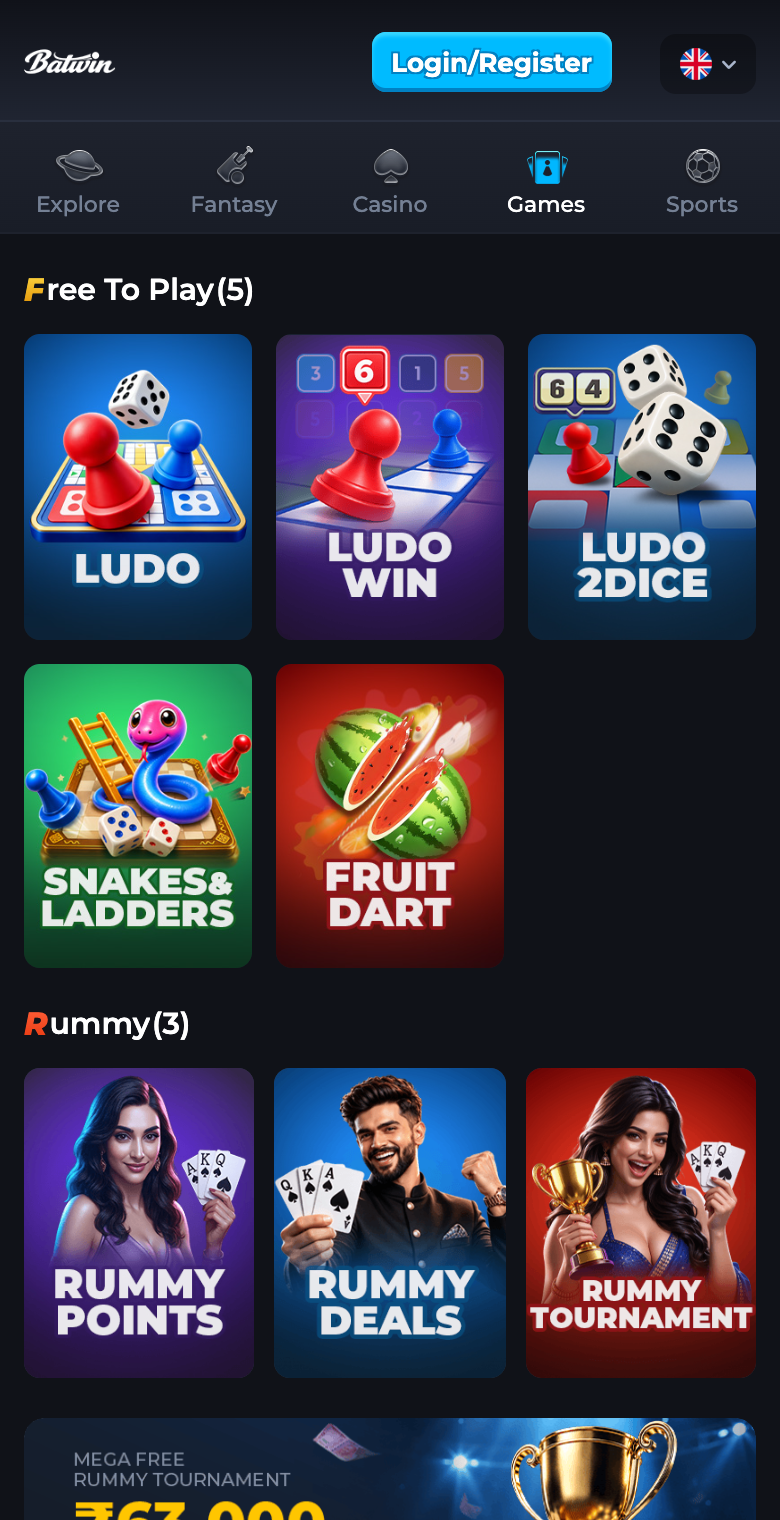
What the card has to show
- Format name. Points, Deals or Tournament. If you cannot tell which, you cannot tell how the session ends.
- Stake. Per-point value on Points. Buy-in on Deals and Tournament. Compare it with the session cap before you sit, not after the first hand.
- Length, where the format has one. Deal count on Deals. Round structure on Tournament. If the count is not on the card, you do not know how long your chips are committed.
- Seats. A two-player table and a full table are different clocks and different drop decisions. Read the seat count on the card.
Hand rules, drop costs and point charts also live on that table, not in this directory. Another app's drop penalty is not evidence of this table's penalty. Open the rules on the card you are about to join.
Points: one hand, rupees now
On a Points table every point has a rupee value, and that value is the number that matters before you sit. One hand is the whole event. When the hand ends, the result settles. There is no later deal to earn the loss back inside the same sitting. A bad hand costs its points times the printed value immediately.
Choose Points when the clock is one hand and the value on the card is an amount you can lose in full without touching money you need this week. A short gap before you have to leave is a Points window, not a Deals window. You will not finish a fixed run of deals in that gap, and abandoning a Deals table mid-run is not the same as finishing a Points hand.
A drop, if the card allows one, costs what that table's rules sheet says, suffered now in rupees. Do not import a drop chart from another app. Points will not smooth a bad hand across later deals. If you need several hands before the result, you want Deals, and you need the time Deals takes.
Deals: a fixed run, chips at the end
Deals commits you to a fixed number of deals. The count is whatever the card prints. Chips carry from deal to deal. The stack at the end decides the winner, not the first declaration. One bad hand hurts the stack. It does not, by itself, end the session, which is the reason to choose this format when you have the full run in front of you.
The mistake is sitting because the name sounds calmer, then discovering the deal count does not fit the afternoon. A fixed run is a fixed run. If you can only play two hands, and the card shows more than you can finish, this is not your table. Leaving early is not a style choice you should assume is free. Read the exit rule on the card before you buy in. If the exit rule is unclear, skip the table. There will be another.
A drop still costs what the rules sheet says, here as chips inside the remaining run rather than an immediate rupee settlement. More hands mean one deal weighs less. That is a calmer path, not a better long-run result. Pick Deals for the clock and the printed buy-in, not because a longer format sounds more skillful.
Tournament: elimination and a pool
Tournament is the long format. You buy into a field. Rounds knock players out. A prize pool is the reason the field exists, and the pool structure is on the card, not in a guess from the lobby art. Entry is not a single opponent unless the card says the table is heads-up. A large field is a time commitment and a spread between buy-in and top prize. Both should be visible before you enter.
The hidden cost is time. A knockout does not end when you want a break, and the buy-in shares the wallet with any fantasy contest you meant to join the same evening. Read the exit rule before you enter. Do not assume you can leave with chips, and do not assume a missed round is a pause. If disconnect rules are missing, wait. Phone tests belong on the free row first.
Tournament is the wrong first paid action on a new account. The roadmap keeps that first action small enough to explain in a sentence. Come back after a Points hand and a finished Deals run.
Match the format to the minutes
| You have | Format | Sit only if |
|---|---|---|
| One hand, then you leave | Points | The per-point value is visible and inside the session cap |
| A full run of hands | Deals | The deal count is printed and you can stay for all of it |
| An evening and a published pool | Tournament | Buy-in, exit rule and round structure are on the card, and the cap covers the lock-up |
| No stake today | None of these | You open the free row instead. Rummy tables stake |
If the stake is above the session cap, skip the card. A calmer format does not shrink a buy-in. The free row is the zero-stake alternative; the Ludo and Rummy page answers what those boards do not pay.
Skill label, and the states that still restrict play
In India, rummy is widely treated as a game of skill rather than a pure chance draw, which is why Points, Deals and Tournament tables exist. The label is a classification, not a result, and not a promise that a careful player wins the sitting.
The label also does not cancel state restrictions. Real-money online games face limits in Andhra Pradesh, Assam, Nagaland, Odisha, Sikkim and Telangana, and the rules move. If you live in one of those states, do not sit a staked table and do not deposit in order to try. Confirm the current position where you live. The disclaimer carries the same list, the 18+ line, and the fact that this directory does not operate the tables. Skill does not make a stake safe, and a guide does not outrank the state.
Mistakes that put you on the wrong table
- Sitting before the value or the deal count is visible. You cannot cap a number you have not read.
- Using another app's drop chart. Open this table's rules. Penalties are not a shared standard you should assume.
- Deals when you only have one hand's time. The run is fixed. A partial run is not the format you chose.
- A tournament on fantasy night. One wallet. The buy-in and the contest entry are the same balance, and the tournament may lock its share.
- Treating the skill label as permission. It does not override Andhra Pradesh, Assam, Nagaland, Odisha, Sikkim or Telangana, and it does not remove the chance in the deal.
After you stand up
Note the format, the stake on the card, and if the run was finished. Leaving a Deals table early is a new buy-in next time, not a repair, and it still hits the weekly cap. Install steps are on the start guide. Other titles are on the game list. Slots and Aviator rules are on the guides index. The table text is the binding version.